


Is a Tankless Water Heater Right for Your Home? Here’s What You Need to Know First
The tankless water heater pros and cons every Southern California homeowner should understand come down to this: tankless units heat water on demand, save energy, and last longer — but they cost more upfront and have limits on how much hot water they can deliver at once.
Quick Answer: Tankless Water Heater Pros and Cons
| Tankless Water Heater | |
|---|---|
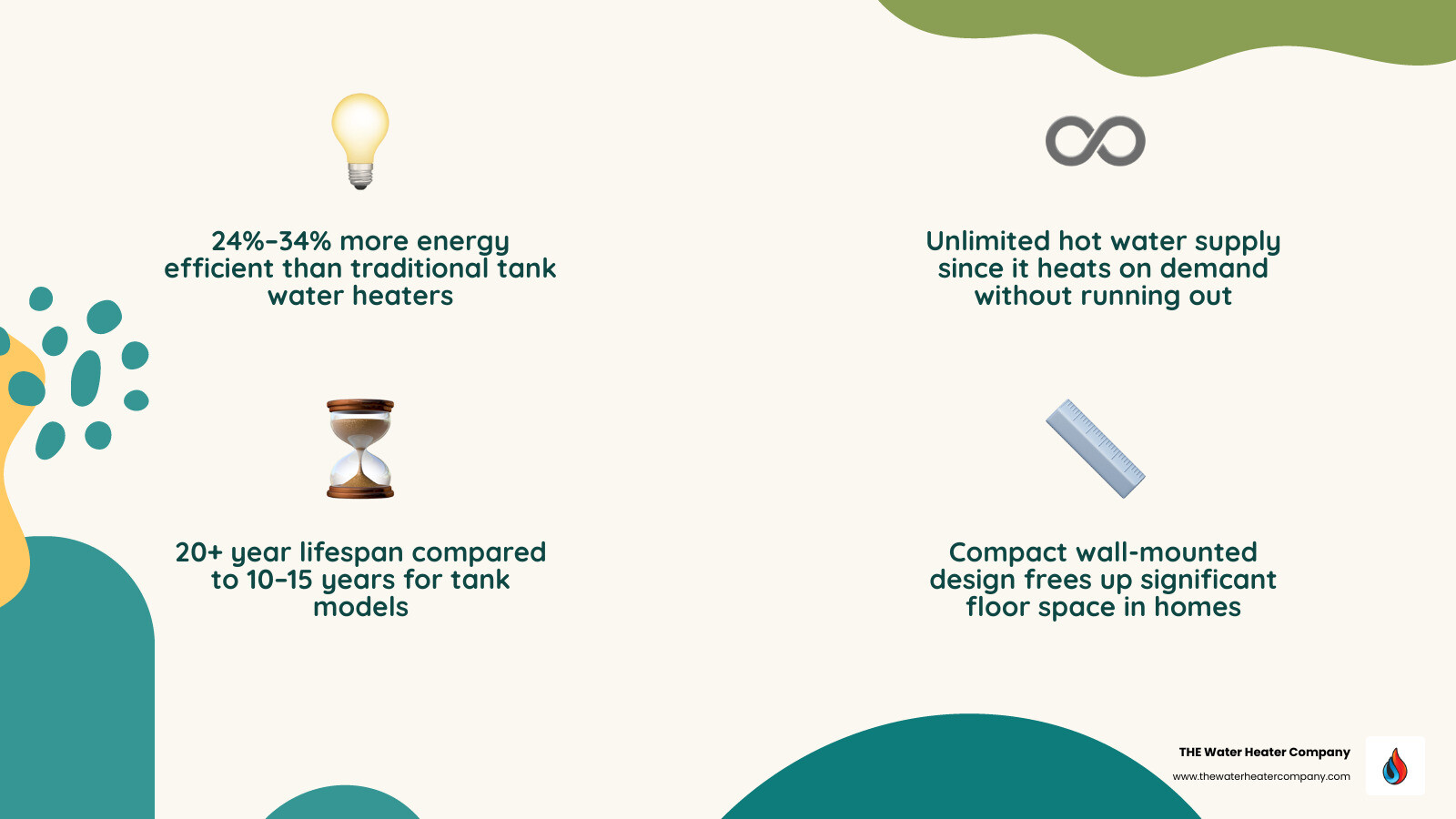
| Energy efficiency | 24%–34% more efficient than tank models for average households |
| Hot water supply | Unlimited — heats on demand, never runs out |
| Lifespan | 20+ years (vs. 10–15 years for tank heaters) |
| Space | Compact, wall-mounted — frees up significant floor space |
| Upfront cost | Higher than traditional tank heaters |
| Flow rate | Limited — gas models typically 5–10 GPM; electric 2–5 GPM |
| Installation | More complex — may require gas line or electrical upgrades |
| Power outages | No hot water available, even on gas models |
| Maintenance | Annual descaling and filter cleaning required |
| Tax incentives | 30% federal tax credit available for qualifying Energy Star gas models |
Here’s the reality most homeowners face: your current water heater works fine — until it doesn’t. Maybe you’ve noticed lukewarm showers when the dishwasher runs at the same time. Maybe your unit is getting up there in age. Or maybe you’re just tired of paying more every month to heat water you’re not even using yet. Whatever brought you here, you’re asking the right question before making a decision that affects your daily comfort and your wallet for the next two decades.
Tankless water heaters have grown from a niche upgrade to a mainstream choice — and for good reason. But they’re not the perfect fit for every home or every budget. The goal of this guide is to help you cut through the noise and figure out whether one makes sense for your specific situation, especially as a Southern California homeowner.
I’m Anthony Hamilton, Co-Founder and CEO of THE Water Heater Company, and I’ve spent years in the field installing, repairing, and advising homeowners on exactly these kinds of decisions — including the full range of tankless water heater pros and cons across a wide variety of home types and household sizes. Let’s walk through everything you need to make a confident, informed call.
Understanding the Tankless Water Heater Pros and Cons
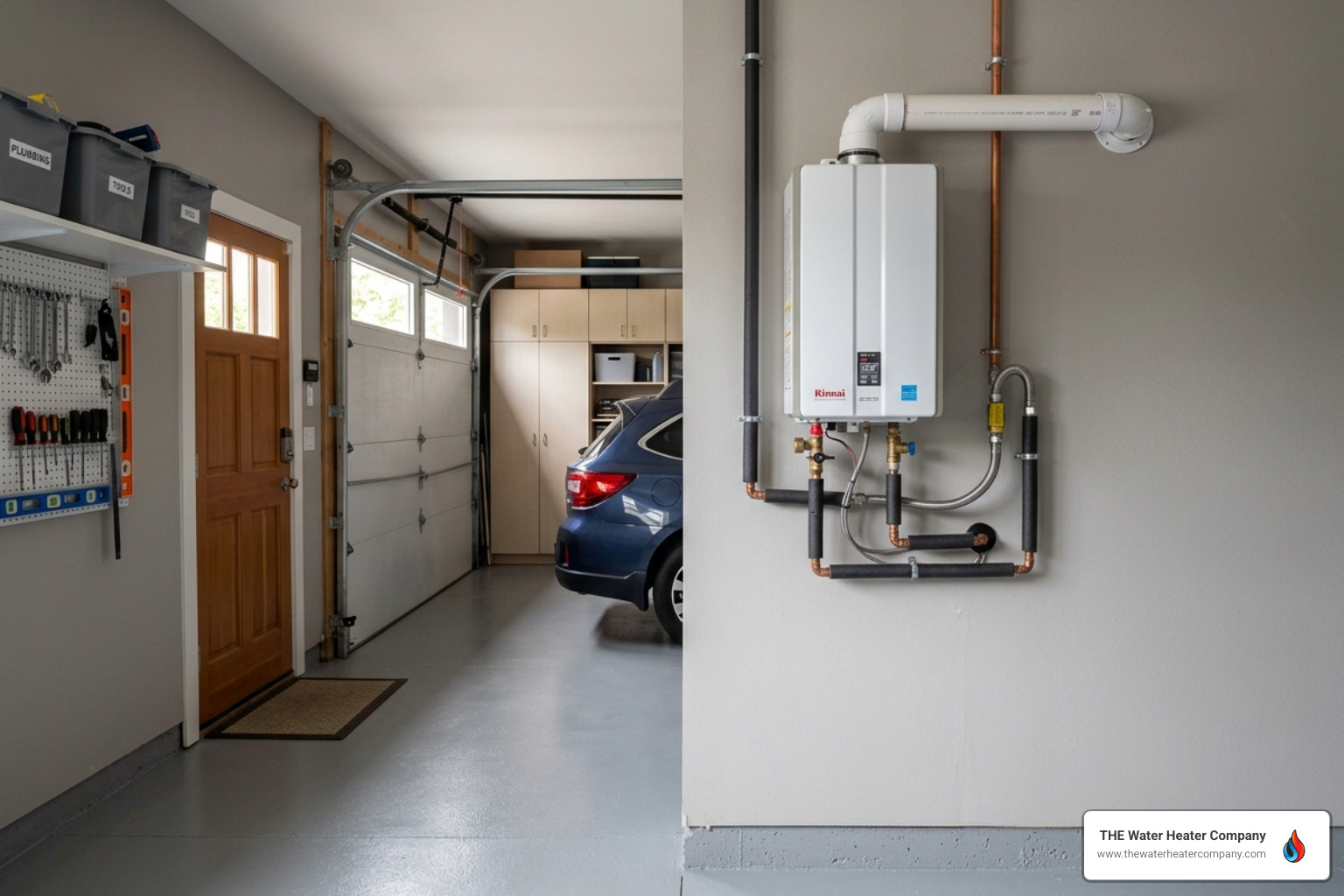
To truly grasp the tankless water heater pros and cons, we first need to look at how these systems differ from the big metal cylinders most of us grew up with. A traditional tank heater is essentially a giant kettle that stays on all day, keeping 40 to 80 gallons of water hot just in case you need it. This leads to “standby heat loss,” where energy is wasted heating water that sits idle while you’re at work or asleep.
Tankless units, often called “demand-type” or “instantaneous” heaters, ditch the tank entirely. When you turn on a hot water tap in your Pasadena or Irvine home, a flow sensor detects the movement of water. This triggers a high-powered gas burner or electric heating element. The cold water travels through a heat exchanger, reaching your desired temperature in seconds.
The primary advantage here is endless hot water. If you have a house full of guests in Santa Barbara, you don’t have to worry about the fifth person taking a cold shower. However, because they heat water on the fly, they have a limited “flow rate.” This means they can provide a steady stream of hot water forever, but they might struggle if you try to run the shower, the dishwasher, and the washing machine all at the exact same moment.
If you find your current system isn’t keeping up, it might be time for a professional water heater repair or an upgrade. Our team at THE Water Heater Company specializes in tankless water heater services to help you navigate these choices.
Evaluating Tankless Water Heater Pros and Cons for Energy Savings
As we move into April 2026, energy efficiency is more than just a buzzword for Southern California residents; it’s a necessity. One of the most significant tankless water heater pros and cons involves the impact on your utility bills.
According to the U.S. Department of Energy, for homes that use 41 gallons or less of hot water daily, tankless heaters can be 24% to 34% more energy-efficient than traditional tanks. Even in high-demand households, they remain 8% to 14% more efficient. This translates to an average annual saving of $70 to $80, though high-efficiency gas models can save even more over time.
Beyond monthly savings, there is the long-term ROI. While the initial investment is higher, the extended lifespan—often exceeding 20 years—means you won’t be paying for a replacement nearly as often as you would with a tank model. Furthermore, many homeowners can take advantage of a federal tax credit of 30% (averaging around $600) for Energy Star-certified gas tankless models. We always recommend checking our specials and rebates page to see what local incentives might apply to your installation in Los Angeles or Santa Ana.
Assessing Tankless Water Heater Pros and Cons for Multi-Bathroom Homes
In larger Southern California homes with multiple bathrooms, the “flow rate” becomes the most critical factor in the tankless water heater pros and cons debate. Flow rate is measured in Gallons Per Minute (GPM).
- Gas Tankless Heaters: Typically offer 5–10 GPM, which is usually enough to run two showers and a faucet simultaneously.
- Electric Tankless Heaters: Generally offer 2–5 GPM, which may only support one major fixture at a time.
For a household in Santa Clarita with four or more people, a single tankless unit might face challenges during the “morning rush.” You might experience the “cold water sandwich”—a brief burst of cold water if someone turns a tap on and off quickly, causing the heater to cycle.
To solve this, many homeowners opt for hot water recirculating systems which help deliver hot water to distant faucets faster, or they install “point-of-use” tankless units specifically for a kitchen sink or a master bath. Choosing the right size is a science, and our technicians are experts at calculating the peak GPM for your specific home layout.
Comparing Tankless vs. Traditional Tank Systems
When deciding between these two technologies, it helps to see them side-by-side. Traditional tank water heaters are familiar and have a lower entry cost, but they come with risks that tankless units largely avoid.
| Feature | Tankless Heater | Traditional Tank |
|---|---|---|
| Lifespan | 20+ years | 10–15 years |
| Physical Footprint | Small, wall-mounted | Large, floor-standing |
| Water Damage Risk | Low (no tank to burst) | High (tank can leak or rupture) |
| Hot Water Supply | Continuous/Endless | Limited to tank capacity |
| Recovery Time | Instant | 20–60 minutes |
One major “pro” for tankless in earthquake-prone areas like Van Nuys and Camarillo is safety. Because there is no 50-gallon tank of boiling water standing in your garage, the risk of a massive flood during a seismic event is significantly reduced. Regardless of which system you choose, we highly recommend installing earthquake valves to protect your home. If your old tank is already showing signs of rust or leaking, it’s likely time to consider a water heater replacement.
Selecting the Best Unit for Southern California Homes
Choosing the right tankless model involves more than just picking a brand. You need to consider fuel type and technology:
- Condensing vs. Non-Condensing: Condensing units are the gold standard for efficiency. They use a second heat exchanger to capture heat from exhaust gases that would otherwise be wasted. This allows them to use cheaper PVC venting instead of expensive stainless steel.
- Gas vs. Electric: Most Southern California homes are better suited for gas models due to their higher GPM output. However, electric models are compact and don’t require venting, making them popular for small condos.
We proudly install industry-leading brands tailored to our local climate. For high-performance condensing technology, we often recommend Navien systems or Noritz systems. For those looking for reliable, American-made durability, Bradford White models are a fantastic choice.
Maintenance and Local Water Quality
One of the “cons” often cited is the maintenance requirement. In areas like Los Angeles and Santa Ana, we deal with relatively hard water. Minerals like calcium and magnesium can build up inside the heat exchanger, reducing efficiency and potentially damaging the unit.
To keep your system running for its full 20-year lifespan, you should:
- Perform annual flushing and descaling to remove mineral buildup.
- Check pressure regulators to ensure your home’s plumbing isn’t being over-stressed.
- Consider water filtration and conditioning to treat the water before it even reaches the heater.
Regular water heater maintenance is the key to protecting your investment.
Frequently Asked Questions about Tankless Water Heaters
How long do tankless water heaters last compared to traditional tanks?
As of 2026, the data remains consistent: tankless units last about 20 years, nearly double the 10–12 year average of a tank model. This is partly because tankless units are built with replaceable parts. If a single component fails, we can often swap it out, whereas a leaking tank usually requires a total system replacement. Our professional water heater services ensure these components are checked and maintained properly.
Are tankless water heaters effective in colder climates?
While Southern California is generally warm, the temperature of incoming groundwater can drop in the winter, especially in areas like Santa Clarita. This requires the heater to work harder to reach your set temperature. In these cases, we recommend high-BTU gas models to ensure you don’t notice a drop in performance when the weather cools down.
Do tankless water heaters provide instant hot water at the tap?
This is a common misconception. While the heater creates hot water instantly, that water still has to travel through the pipes to reach your shower. If your heater is in the garage and your bathroom is on the second floor, you’ll still have a “lag time.” To get truly instant hot water, we often pair tankless units with hot water recirculating systems.
Conclusion
Navigating the tankless water heater pros and cons can feel overwhelming, but you don’t have to do it alone. Whether you prioritize the endless hot water for your family in Pasadena or the space-saving benefits for your home in Van Nuys, THE Water Heater Company is here to help.
We are a local, family-owned Southern California business dedicated to being the trusted authority in water heating. From Santa Barbara to Irvine, our expert technicians provide fast, reliable service with fair pricing and industry-leading warranties. We believe in providing solutions that fit both your household needs and your long-term budget.
Ready to see if a tankless system is the right fit for your Southern California home? Contact THE Water Heater Company today for a personalized assessment and expert installation.

The Essential’s
Call THE Water Heater Company today to get immediate help with your water needs.
“
-

“Fair Pricing & Expert Service”
Their technician Gonzo, was clearly very competent and more importantly, he took the time and effort to do a really fantastic job.
-
“Fantastic Service!”
THE Water Heater Company understood the situation I was going through. They were able to help me out and get the job done quickly.
-
“Reasonable Pricing”
Kevin did a great job on replacing my old leaky yet still working water heater. He answered all my questions and explained all the details. -
“Quick Response Time”
He was very informative and responsive to my questions and when I am making a huge investment in my home I want to be sure I am going with a company I could count on and would not cut corners. -
“Real Professionals”
Communication was great with the owner and they were very responsive, ensuring a first-class installation and experience.
-
“Great Service”
Not only did he do the service we needed, but checked the whole unit in addition to other waterline components. -
“Professional and Responsive”
They have repaired my water heater, installed a hot water recirculating pump, and now installed a new water heater. -
“Real Professionals”
It took a little over three hours but no management was necessary as the guys were very competent and clearly have been doing this for a long time.


