


How Often Should You Descale a Tankless Water Heater for Longevity?
How often should you descale a tankless water heater depends primarily on your local water hardness, but here’s a quick reference to guide your schedule:
| Water Hardness | Recommended Descaling Frequency |
|---|---|
| Soft water (0-60 ppm) | Once a year |
| Moderate hardness (61-120 ppm) | Every 12-18 months |
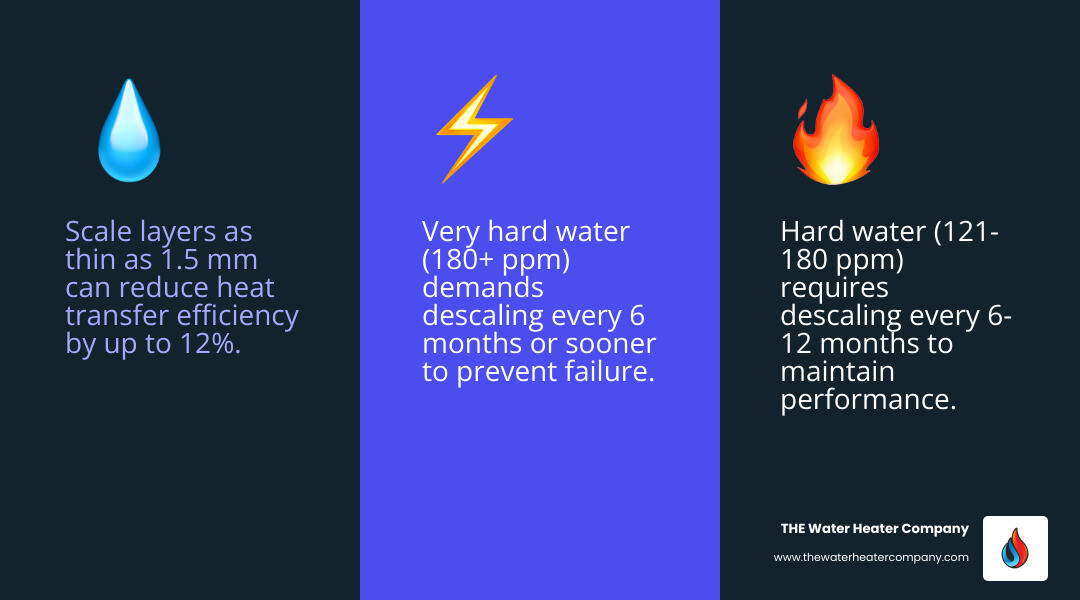
| Hard water (121-180 ppm) | Every 6-12 months |
| Very hard water (180+ ppm) | Every 6 months or sooner |
If you live in Southern California – where hard water is common across cities like Los Angeles, Pasadena, and Santa Clarita – your system is likely working harder than you think. Mineral-rich water passes through your tankless heater’s heat exchanger every time you run the tap, and over time, calcium and magnesium deposits build up on the internal surfaces. Research shows that scale layers as thin as 1.5 mm can reduce heat transfer efficiency by up to 12%. Left unchecked, that buildup quietly drives up your energy bills, weakens your hot water flow, and shortens the life of your unit.
The good news? Staying on top of descaling is straightforward once you know what to look for and when to act. This guide walks you through everything – from reading your water hardness to recognizing early warning signs and performing the service correctly.
I’m Anthony Hamilton, Co-Founder and CEO of THE Water Heater Company, and after years of hands-on work servicing tankless systems throughout Southern California, I’ve seen how often homeowners underestimate how often should you descale a tankless water heater – and what it costs them when they wait too long. Let’s break it all down so you can protect your investment with confidence.
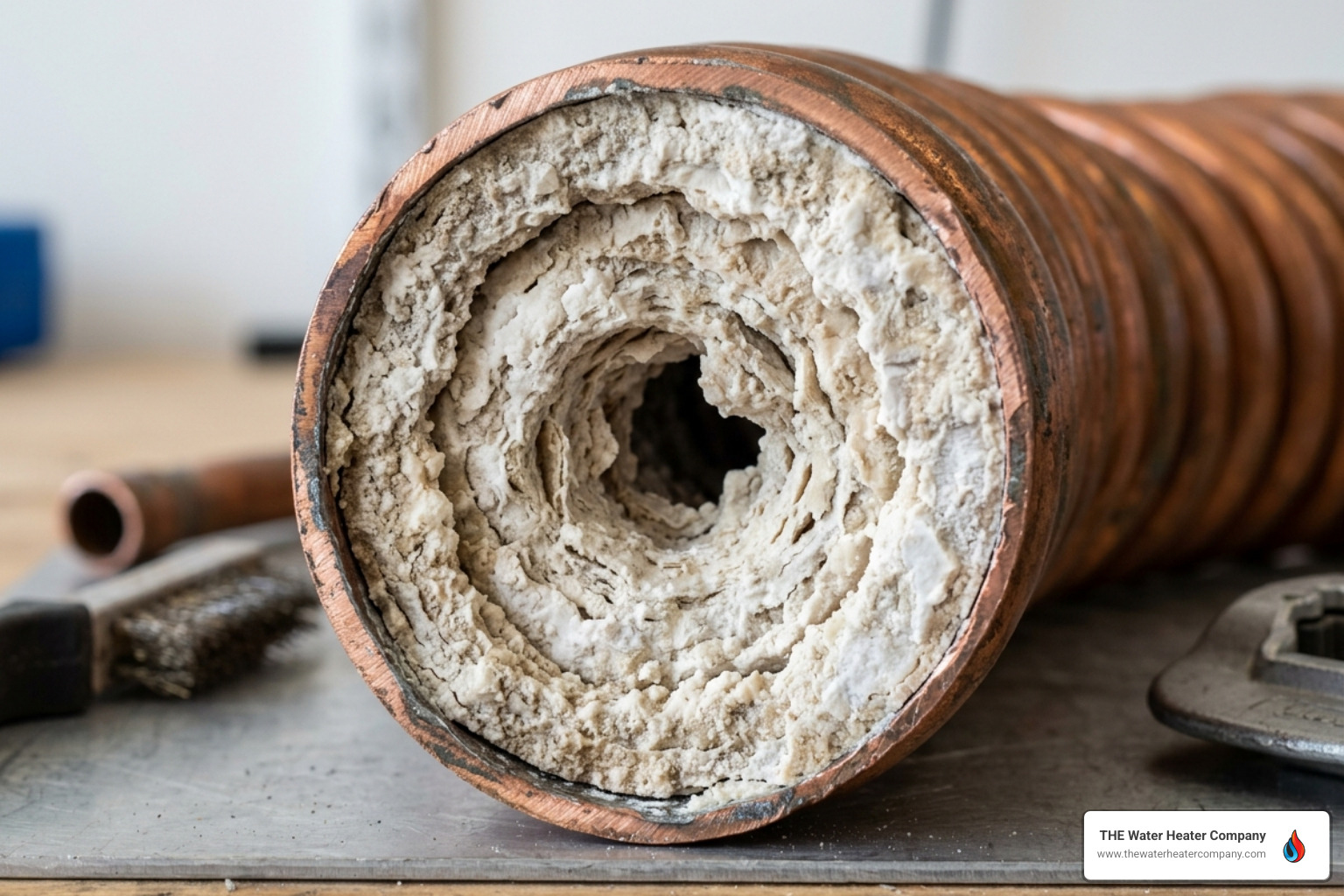
When we talk about descaling—sometimes called “flushing”—we are referring to the process of removing calcium and magnesium deposits that bake onto the heat exchanger. Think of it like the “gunk” that builds up in a coffee maker. In a tankless unit, this “gunk” acts as an insulator, forcing the burner to work harder and longer to heat the water to your desired temperature.
So, how often should you descale a tankless water heater to ensure it reaches its full 20-year potential? While most manufacturers provide a baseline recommendation of once per year, the “real-world” answer is more nuanced.
If you have soft water or a high-quality water softener, you can usually stick to an annual schedule. However, in areas with high mineral content, such as many neighborhoods in Santa Barbara or Irvine, scale formation becomes significant within just 6 to 12 months of operation. If your water hardness exceeds 180 mg/L (classified as “very hard”), waiting a full year could lead to permanent damage.
For those who want to dive deeper into how these systems function and why they are so sensitive to minerals, you can find more info about tankless water heaters on our specialized service page. The goal is to prevent the scale from hardening into a rock-like substance that is nearly impossible to remove without corrosive chemicals that could harm the unit.
Factors That Determine Your Maintenance Schedule
Not every household uses hot water the same way, and not every city has the same water chemistry. Understanding these variables helps you move from a “guessing” schedule to a “precision” schedule.
Water Hardness (The #1 Factor)
The concentration of dissolved minerals in your water is the primary driver of scale. We often measure this in parts per million (ppm) or grains per gallon (gpg).
| Hardness Level | PPM Range | Grains Per Gallon (gpg) | Recommended Flush |
|---|---|---|---|
| Soft | 0 – 60 | 0 – 3.5 | Every 12-24 Months |
| Moderate | 61 – 120 | 3.6 – 7.0 | Every 12 Months |
| Hard | 121 – 180 | 7.1 – 10.5 | Every 6-9 Months |
| Very Hard | 181+ | 10.6+ | Every 3-6 Months |
Usage Volume and Temperature Settings
If you have a large family in Santa Clarita running multiple showers and the dishwasher simultaneously, your unit processes a higher volume of minerals daily. Furthermore, higher set temperatures (above 120°F) actually accelerate the precipitation of minerals out of the water and onto the heat exchanger. If you like your water extra hot, you should lean toward more frequent maintenance.
Unit Age and Design
Older units may have micro-cracks or surface irregularities on the heat exchanger that give minerals a “foothold” to grow faster. Newer models often feature improved designs, but they still require vigilance. If you aren’t sure where your system stands, our team provides professional maintenance services to assess your unit’s health and set a custom schedule.
Recognizing the Signs Your System Needs Service
Sometimes, your water heater will tell you it’s struggling before it completely shuts down. Being proactive can save you from a cold shower and a costly emergency call.
- Fluctuating Water Temperatures: If your shower goes from hot to lukewarm and back again, scale may be interfering with the unit’s internal sensors. This is often called the “cold water sandwich” effect, and it’s a classic sign of buildup.
- Reduced Water Pressure: Scale doesn’t just sit on the walls; it can physically narrow the pipes inside the heat exchanger. If your hot water pressure is noticeably lower than your cold water pressure, the system is likely “choked” by minerals.
- Unusual Noises: Have you heard popping, hissing, or rumbling sounds coming from the unit? These are often caused by air pockets forming within the scale layers as the water heats up.
- Error Codes: Modern units from brands like Navien or Rinnai will eventually display error codes (like “E3” or “LC”) when flow is restricted or the unit is overheating.
- Increased Energy Bills: If your gas or electric bill is creeping up without a change in usage, your heater is likely burning more fuel to “fight” through the scale.
If you are experiencing any of these symptoms, it’s time to call for expert water heater repair to clear the system before the heat exchanger fails entirely.
Step-by-Step Guide to Descaling Your System
For the DIY-inclined homeowner, descaling is a manageable task that takes about 60 to 90 minutes. You will need a submersible pump, two heavy-duty hoses, a 5-gallon bucket, and about 4 gallons of food-grade white vinegar.
- Step 1: Isolate the Unit. Turn off the power (unplug it) and shut off the gas valve. Close the main cold water inlet and hot water outlet valves to isolate the heater from your home’s plumbing.
- Step 2: Connect the Hoses. Attach your hoses to the service ports (usually red and blue). Connect the “cold” hose to your submersible pump and the “hot” hose to drain back into your bucket.
- Step 3: Circulate the Solution. Submerge the pump in the bucket filled with vinegar. Open the service port valves and turn on the pump. Let the vinegar circulate through the heat exchanger for at least 45–60 minutes.
- Step 4: The Fresh Water Flush. After the hour is up, turn off the pump. Close the cold service port and open the main cold water inlet to flush the vinegar and remaining sediment out through the hot service hose for 10–15 minutes.
- Step 5: Clean the Filter. Don’t forget to unscrew and clean the cold water inlet filter screen, which often catches larger sediment particles.
- Step 6: Restart. Close all service ports, open the main valves, restore power and gas, and test the water.
If your unit is older or has been neglected for several years, a simple vinegar flush might not be enough to restore performance. In those cases, you might want to explore water heater replacement options to upgrade to a more efficient, modern system.
Preventing Scale Buildup in Southern California Homes
While descaling is a necessary part of maintenance, you can significantly reduce how often you have to do it by addressing the water quality at the source. Southern California is notorious for hard water. In cities like Camarillo, Pasadena, and Van Nuys, the mineral content can be double or triple what is considered “soft.”
The most effective way to protect your tankless investment is through water filtration and conditioning. By installing a water softener or a scale inhibitor system, you can neutralize the calcium and magnesium before they ever enter the heater.
- Santa Barbara & Santa Clarita: These areas often deal with very high mineral counts. A dedicated water softener can extend the time between flushes from 6 months to 2 years.
- Los Angeles & Irvine: While water quality varies by neighborhood, we generally recommend at least a scale prevention filter to keep the unit running at peak efficiency.
Investing in water conditioning doesn’t just help your water heater; it protects your dishwasher, washing machine, and even your skin and hair from the harsh effects of hard water.
Frequently Asked Questions
How often should you descale a tankless water heater in Southern California?
In the Southern California region—including Los Angeles, Pasadena, and Santa Ana—we strongly recommend descaling at least once every 12 months. However, because our local water is often on the “hard” to “very hard” side of the spectrum, many of our customers find that a 6-month interval provides much better performance and lower energy bills. If you notice white, chalky residue on your showerheads, your water heater is likely scaling up at the same rate.
How often should you descale a tankless water heater with a water softener?
If you have a properly maintained water softener, you can typically scale back to once every 18-24 months. However, you should still perform an annual inspection. A water softener prevents the “hard” scale, but it doesn’t always stop all sediment from entering the system. Regular pressure regulator maintenance and sediment flushes will ensure that your “softened” system remains in top-tier condition for its entire lifespan.
Can I use regular white vinegar for descaling?
Yes! Standard food-grade white vinegar (5% acetic acid) is the most common and safest solution for residential descaling. It is effective enough to dissolve calcium deposits but gentle enough not to damage the copper or stainless steel components of your heat exchanger. Avoid using harsh chemical cleaners like CLR unless specifically recommended by your manufacturer, as they can be too corrosive for the thin walls of a tankless unit.
Conclusion
Maintaining your tankless water heater shouldn’t be a source of stress. By understanding how often should you descale a tankless water heater based on your specific location and usage, you can ensure your home always has a steady supply of hot water while keeping your utility costs in check.
At THE Water Heater Company, we pride ourselves on being the local Southern California experts. Whether you are in Santa Barbara, Camarillo, or the heart of Los Angeles, our experienced technicians are ready to provide the dependable service you need to keep your system running like new. Don’t wait for an error code to pop up—be proactive and protect your home today.
Ready to schedule your annual maintenance? View our current specials and rebates to see how you can save on your next service visit. We look forward to helping you achieve peak performance from your tankless system!

The Essential’s
Call THE Water Heater Company today to get immediate help with your water needs.
“
-

“Fair Pricing & Expert Service”
Their technician Gonzo, was clearly very competent and more importantly, he took the time and effort to do a really fantastic job.
-
“Fantastic Service!”
THE Water Heater Company understood the situation I was going through. They were able to help me out and get the job done quickly.
-
“Reasonable Pricing”
Kevin did a great job on replacing my old leaky yet still working water heater. He answered all my questions and explained all the details. -
“Quick Response Time”
He was very informative and responsive to my questions and when I am making a huge investment in my home I want to be sure I am going with a company I could count on and would not cut corners. -
“Real Professionals”
Communication was great with the owner and they were very responsive, ensuring a first-class installation and experience.
-
“Great Service”
Not only did he do the service we needed, but checked the whole unit in addition to other waterline components. -
“Professional and Responsive”
They have repaired my water heater, installed a hot water recirculating pump, and now installed a new water heater. -
“Real Professionals”
It took a little over three hours but no management was necessary as the guys were very competent and clearly have been doing this for a long time.


