Everything You Need to Know About Water Filtration & Conditioning in LA
Why Clean Water Matters for Los Angeles Homeowners
Water filtration & conditioning in los angeles, ca addresses the unique challenges that come with the city’s complex water supply, from hard water buildup on your fixtures to emerging contaminants like PFAS in your tap. Los Angeles sources its water from a mix of surface water, snowmelt, the Colorado River, and local groundwater—each bringing different quality issues that affect your home, your appliances, and your family’s health.
Quick Answer: What You Need to Know
- Hard water is common in LA, causing scale buildup on faucets, fixtures, and appliances
- PFAS “forever chemicals” have been detected in California tap water above recommended guidelines
- Chloramine (chlorine with ammonia) is used for disinfection and can affect taste and smell
- Water scarcity in Southern California increases reliance on diverse sources, making filtration more important
- Solutions include whole-home filtration, reverse osmosis, water softeners, and salt-free conditioners
Whether you’ve noticed crusty white buildup on your showerhead, your water tastes or smells off, or you’re simply concerned about what’s flowing through your pipes, the right treatment system can make a real difference. From protecting your plumbing and extending appliance life to ensuring safer drinking water for your family, filtration and conditioning systems solve problems you see every day—and some you don’t.
Ready to improve your water quality? Learn about our water filtration services or schedule a free consultation to find the right solution for your home.
I’m Anthony Hamilton, Co-Founder and CEO of THE Water Heater Company, and I’ve spent years helping Southern California homeowners solve their water quality challenges through water filtration & conditioning in los angeles, ca. From hard water damage to contaminant concerns, we’ve seen how the right system transforms daily life—and we’re here to help you make sense of your options.
Understanding LA’s Water: Common Quality Concerns
Living in Los Angeles, we often take for granted the water that flows from our taps. However, our water supply is a complex blend, and with that complexity come specific challenges that can impact our homes and our health. Understanding these concerns is the first step toward finding the right solution for your family.
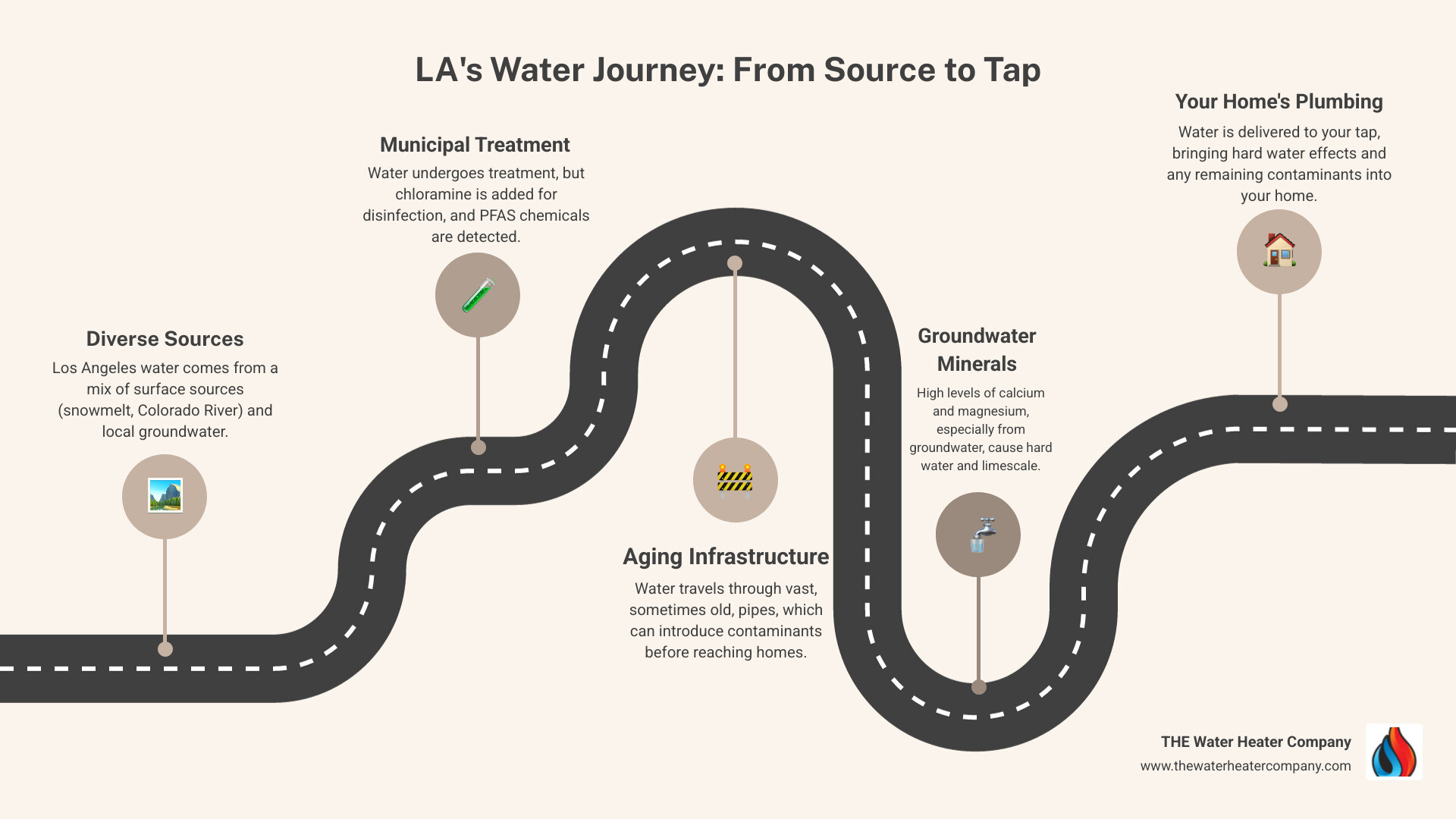
One of the most widespread issues we encounter in Los Angeles is hard water. This isn’t just an annoyance; it’s a significant problem caused by high levels of dissolved minerals, primarily calcium and magnesium. These minerals are particularly prevalent in areas served by groundwater, which is common in many parts of Southern California, including Los Angeles, Santa Clarita, and Van Nuys. Hard water leads to that frustrating limescale buildup on faucets, showerheads, and fixtures, making them look dull and requiring constant scrubbing. It also leaves unsightly spots on dishes and can make your skin feel dry and your hair dull after showering.
Beyond the visible effects, Los Angeles’s water quality often faces concerns from various contaminants. Our water sources, which include surface water from far-off rivers and local groundwater, can absorb different impurities. Surface water, for example, is more susceptible to seasonal contaminants like algal blooms and naturally occurring bio-materials. Groundwater, while often cleaner from surface-level pollutants, brings its own set of challenges, most notably contributing to hard water.
A more serious and growing concern across California, including Los Angeles, is the presence of PFAS, often referred to as “forever chemicals.” These synthetic compounds have been found in tap water, sometimes exceeding recommended guidelines. PFAS are persistent and can accumulate in the body, linked to various health issues such as liver damage, immune system disruption, thyroid disorders, and an increased risk of certain cancers. Naturally, this raises significant questions about the long-term safety of our drinking water.
Another chemical commonly found in Los Angeles tap water is chloramine. This variant of chlorine contains ammonia and is used by municipal water providers for disinfection. While effective at killing harmful bacteria, chloramine can impart an unpleasant taste and odor to our water. It can also be harsh on skin and hair, and some individuals prefer to remove it for both aesthetic and health reasons.
Compounding these issues is the significant challenge of water scarcity in Southern California. As droughts intensify, our region must increasingly rely on a diverse range of water resources, including snowmelt from the Sierra Nevada Mountains and water from the Colorado River. This increased reliance on varied sources means that water quality can fluctuate, making dependable and effective water filtration & conditioning in los angeles, ca more critical than ever.
Understanding these specific challenges—from the everyday nuisance of hard water to the more serious health implications of contaminants like PFAS—empowers us to seek out solutions that genuinely improve our home’s water quality. For more information about our services in Los Angeles, visit our Los Angeles service page.
Solutions for Your Home: Types of Water Treatment Systems
Once we understand the unique water quality challenges in Los Angeles, the next step is exploring the various systems designed to address them. The good news is, there’s a solution for almost every concern, from making your drinking water pristine to protecting every faucet in your home.
When we talk about water treatment systems, we generally categorize them into a few main types:
- Whole-home systems: These are installed at the main water line entry point to your home, ensuring that every drop of water used throughout the house—for drinking, bathing, cooking, and cleaning—is treated. They are comprehensive solutions for addressing widespread issues like chlorine, sediment, and even some contaminants.
- Point-of-use (POU) filters: These systems treat water at a specific faucet or outlet, such as an under-sink filter for drinking water or a showerhead filter. They are excellent for targeted treatment, particularly for improving the taste and safety of drinking water.
- Water softeners: Traditionally, these systems use an ion exchange process to remove the minerals (calcium and magnesium) that cause hard water. They are highly effective at preventing scale buildup and its associated problems.
- Salt-free water conditioners: These are an alternative to traditional softeners, designed to condition water and prevent scale formation without adding salt or removing beneficial minerals.
- Reverse osmosis (RO) systems: These are advanced filtration systems, typically installed under the kitchen sink, that push water through a semi-permeable membrane to remove a vast array of dissolved solids and contaminants.
- Carbon filtration: Often a component of both whole-home and POU systems, carbon filters are excellent at removing chlorine, chloramine, volatile organic compounds (VOCs), and improving taste and odor.
For a deeper dive into the science behind these systems, you can read our detailed guide on Water Filtration 101: A Breakdown of Carbon, Reverse Osmosis, UV, and Ion Exchange Systems.
Salt-Based Softeners vs. Salt-Free Conditioners
When it comes to tackling hard water, you generally have two main approaches: traditional salt-based water softeners and newer salt-free water conditioners. Both aim to mitigate the effects of hard water, but they do so in fundamentally different ways.
Traditional salt-based water softeners operate on an ion exchange process. Inside the softener, resin beads are charged with sodium (or sometimes potassium) ions. As hard water flows through, the calcium and magnesium ions—the culprits behind hard water—are “exchanged” with the sodium ions. This process effectively removes the hardness minerals, leading to genuinely soft water. The benefits are clear: no more scale buildup, softer skin, and better lathering soap. However, a key consideration is the addition of sodium to your water, which can be a concern for individuals on sodium-restricted diets. Environmentally, the salt brine used to regenerate the system is typically discharged into the wastewater, which has led to salt discharge bans or restrictions in some areas of Southern California due to concerns about water reclamation and salinity in our ecosystems.
Salt-free water conditioners, also known as water descalers, offer an alternative. These systems don’t actually remove calcium and magnesium; instead, they alter the crystalline structure of these minerals so they can’t stick to surfaces and form scale. This means you still have the beneficial minerals in your water, but they behave like soft water. Some advanced salt-free systems use technologies like low-pressure reverse osmosis, which our research shows can significantly reduce natural tap water salt by over 96% while also preventing scale. Other systems might employ magnetic conditioning chambers to achieve similar results, preserving beneficial minerals while preventing buildup. These systems are particularly advantageous in areas with salt discharge ordinances, as they don’t produce a salt-laden wastewater discharge. They also avoid adding sodium to your water, making them a popular choice for those seeking to mitigate hard water effects without traditional softening.
The Role of Reverse Osmosis (RO)
Reverse osmosis (RO) stands out as one of the most effective and comprehensive water filtration methods available, especially for addressing drinking water quality. It’s a sophisticated multi-stage filtration process that can genuinely transform your tap water.
Here’s how it works: water is pushed through a series of filters, including sediment and carbon filters, and then through a semi-permeable membrane. This membrane is the heart of the RO system, capable of removing incredibly small dissolved solids and contaminants by allowing only pure water molecules to pass through. This isn’t just about removing visible particles; RO systems are highly effective at contaminant reduction, tackling a vast array of impurities that other filters often miss.
Our research indicates that RO systems can remove up to 99% of all water contaminants, including many that are of particular concern in Los Angeles. This includes PFAS (“forever chemicals”), lead, arsenic, chromium-6 (which RO can reduce by up to 97%), nitrates, HAA5 and other disinfectant byproducts, chlorine, and even sulfur. They are also exceptionally good at total dissolved solids (TDS) removal, reducing them by 95-97%. This means your water will not only be safer but will also taste significantly better, free from the metallic, chemical, or earthy tastes that can plague LA tap water. Many people describe RO water as being “bottled water without the bottle” – and often, it’s even better!
Given the diverse and sometimes challenging nature of Los Angeles tap water, RO systems are an excellent and highly suitable choice for ensuring premium drinking water quality. Whether your water comes from surface sources, groundwater, or a blend, an RO system provides a robust defense against a wide spectrum of potential issues, offering peace of mind with every glass.
The Advantages of Clean, Conditioned Water for LA Homeowners
Investing in water filtration & conditioning in los angeles, ca isn’t just about addressing problems; it’s about open uping a host of benefits that improve your daily life and protect your most valuable asset—your home.
One of the most immediate and tangible benefits we see is appliance longevity. Hard water minerals cause scale buildup in water heaters, dishwashers, washing machines, and even coffee makers. This scale reduces efficiency, forces appliances to work harder, and ultimately shortens their lifespan. By conditioning your water, you protect these investments, helping them run more efficiently and last longer. In fact, filtering out water contaminants can help you get up to 30% more out of your water-using appliances!
Similarly, your home’s plumbing protection is significantly improved. Hard water minerals can accumulate in pipes, reducing water flow and causing corrosion over time. Filtered and conditioned water helps prevent this buildup, safeguarding your plumbing system from damage and potentially costly repairs.
Beyond the hardware, the benefits extend to your personal well-being. Conditioned water leads to softer skin and hair. No more dry, itchy skin or dull, lifeless hair after a shower! The water will lather better, allowing soaps and shampoos to work more effectively. Speaking of lather, you’ll also notice a reduced need for soap and detergent for laundry and dishwashing. Soft water simply cleans better, meaning you can use less product and still achieve sparkling dishes and brighter, softer clothes. Our research suggests you could see up to a 50% reduction in detergent costs!
And let’s not forget the most direct benefit: better tasting water and food. Removing chlorine, chloramine, and other impurities from your tap water vastly improves its taste and odor. This means more enjoyable drinking water, and since water is a key ingredient in cooking, your food and beverages will taste better too. Plus, with purified water readily available from your tap, you’ll likely reduce your reliance on expensive and environmentally impactful bottled water, contributing to less plastic bottle waste. We even offer a special where you can get a Free Water Heater with Installation of a Whole Home Water Filtration System, making it easier to enjoy these benefits.
Health and peace of mind with water filtration & conditioning in los angeles, ca
The core of why many Los Angeles residents seek water treatment is for health and peace of mind. Knowing what’s in your water, and having the means to improve it, provides a profound sense of security for your family.
Our systems are designed for reducing chemical exposure. By removing harmful chemicals like PFAS “forever chemicals,” chloramines, chlorine, lead, arsenic, and various industrial contaminants, we help ensure the water you drink and bathe in is as clean as possible. This is particularly vital for vulnerable populations such as children, the elderly, and those with compromised immune systems. Providing safe water for the whole family is our priority.
The comprehensive removal of impurities means your improved drinking water isn’t just about taste; it’s about fundamental safety. While municipal water meets certain standards, those standards don’t always cover every emerging contaminant, nor do they account for the aging pipes that water travels through to reach your home. A robust filtration system acts as your personal guardian, providing an extra layer of protection right at your tap.
Protecting your home and saving money
Beyond health benefits, a smart investment in water filtration & conditioning in los angeles, ca translates into significant protection for your home and tangible cost savings over time.
Preventing scale buildup is a major win for your home. Hard water scale can clog pipes, reduce the efficiency of your water heater, and damage appliances like dishwashers and washing machines. Our research indicates that softened water can lead to 24% energy savings when washing clothes and can help your appliances last longer. By addressing hard water, we help extend appliance life and reduce the need for costly repairs or premature replacements.
Think about the time you spend scrubbing hard water stains from your shower doors, sinks, and fixtures. With conditioned water, you’ll experience significantly reduced cleaning time. Soap scum and mineral deposits become a thing of the past, leaving your bathrooms and kitchens sparkling with less effort.
While there’s an initial investment, the long-term value versus relying on bottled water or constantly replacing damaged appliances is substantial. The savings on detergents, energy bills, appliance repairs, and the sheer convenience of having clean, great-tasting water on demand quickly add up, making water filtration and conditioning a wise financial decision for any Los Angeles homeowner.
How to Choose the Right Water Treatment System
Navigating water treatment can feel overwhelming, but choosing the right system for your Los Angeles home doesn’t have to be. We’re here to guide you through the process, ensuring you get a solution that truly meets your needs.
The absolute first step in choosing any water treatment system is water testing. You can’t fix a problem if you don’t know what it is! A professional water test will identify the specific contaminants, mineral levels, and other issues present in your home’s water. This crucial data allows us to recommend a custom solution rather than a one-size-fits-all approach.
When evaluating systems, always look for reputable system certifications. Certifications from organizations like NSF International and the Water Quality Association (WQA) indicate that a product has been independently tested and meets strict standards for contaminant reduction, material safety, and structural integrity. These certifications are your assurance of quality and performance.
For whole-home systems, consider the flow rate. This refers to how much water the system can process per minute without significantly reducing water pressure throughout your home. An undersized or poorly installed whole-house filter can lead to frustrating pressure drops, so choose a system appropriately matched to your household’s water usage.
Finally, think about maintenance requirements, system size, and capacity. Some systems require regular filter changes, while traditional water softeners need salt replenishment. Knowing these factors upfront helps you choose a system that fits your lifestyle and budget. For a full range of services, including water filtration, visit our Services page.
Key factors for water filtration & conditioning in los angeles, ca
When considering water filtration & conditioning in los angeles, ca, there are several key factors unique to our region that we always keep in mind:
- Assessing your household needs: Every home is different. How many people live in your house? What are your primary concerns—drinking water quality, hard water issues, or both? Your answers will help determine whether a whole-home solution, a point-of-use system, or a combination is best.
- Understanding your water quality report: We can help you interpret your water test results and understand what contaminants are prevalent in your specific Los Angeles neighborhood. This allows us to target solutions effectively.
- Whole-home vs. targeted solutions: While a whole-home system offers comprehensive protection, a reverse osmosis system for drinking water combined with a shower filter might be sufficient for some. We’ll help you weigh the pros and cons of each approach.
- Long-term reliability: We prioritize systems built to last and designed for the specific challenges of Southern California water, ensuring you get dependable performance for years to come.
Finding a Reputable Provider
Choosing the right water treatment provider is just as important as choosing the right system. We believe a reputable provider offers more than just products; they offer expertise, support, and peace of mind.
Look for a company with strong local expertise. A provider familiar with Los Angeles’s specific water sources, municipal treatment methods, and common contaminants will be better equipped to recommend and install an effective solution.
Professional installation is non-negotiable. An improperly installed system can lead to leaks, reduced efficiency, or even damage to your plumbing. Our licensed technicians are experts in their field, ensuring your system is installed correctly and efficiently.
Consider the level of service and support offered. Will the company be there for ongoing maintenance, filter changes, and any troubleshooting you might need? A good provider offers comprehensive support throughout the life of your system.
Warranties are also a critical indicator of a company’s confidence in its products and services. Strong warranties provide protection and assurance for your investment. Finally, always check customer reviews and testimonials. They offer valuable insights into a company’s reliability, customer service, and the satisfaction of their clients. We’re proud of our track record and invite you to see Why Choose The Water Heater Company.
Conclusion
As we’ve explored, water filtration & conditioning in los angeles, ca is more than a luxury; it’s a practical necessity for many homeowners. From the persistent challenge of hard water and its damaging effects on appliances and plumbing, to the growing concerns about emerging contaminants like PFAS and chloramine, Los Angeles presents unique water quality issues that demand effective solutions. The complex blend of our water sources, coupled with increasing water scarcity, underscores the critical need for reliable water treatment.
The benefits of clean, conditioned water are far-reaching. You’ll enjoy the health advantages of reduced chemical exposure and purified drinking water, leading to greater peace of mind for your entire family. Your home will also reap rewards, with extended appliance longevity, protected plumbing, and less time spent cleaning stubborn hard water stains. These advantages, combined with potential savings on detergents and bottled water, make a compelling case for investing in your home’s water quality.
The key to changing your home’s water lies in finding a custom solution. There’s no one-size-fits-all answer, which is why a professional water test and expert guidance are invaluable. At The Water Heater Company, we bring our local, family-owned Southern California business expertise to water filtration and conditioning. We’re dedicated to providing fast, reliable, expert service with fair pricing and industry-leading warranties, ensuring you find the right system to meet your family’s specific needs and enjoy the clean, healthy water you deserve.
Ready to take the next step toward better water? Learn more about our comprehensive Water Filtration & Conditioning services today.