


What Every Southern California Homeowner Should Know About Tankless Water Heater Descaling and Maintenance
Tankless water heater descaling and maintenance is the regular process of removing mineral buildup from your unit’s heat exchanger and keeping all its components in good working order. Here’s a quick overview of what it involves:
- Descaling frequency: Once a year for most homes; every 6 months in hard water areas
- Why it matters: Mineral scale reduces heat transfer efficiency and can shorten your unit’s lifespan from 20 years down to 12
- Core process: Circulate a descaling solution (white vinegar or commercial descaler) through the system for 45–60 minutes, then flush with clean water
- Beyond descaling: Clean the inlet filter, test the pressure relief valve, and inspect venting regularly
- When to call a pro: Persistent error codes, pressure drops, unusual noises, or if your unit is still under warranty
Tankless water heaters are one of the best investments a Southern California homeowner can make — delivering hot water on demand and lasting up to 20 years with proper care. But like any appliance, they have a natural enemy: hard water. Southern California is known for its mineral-heavy water supply, and those minerals — mainly calcium and magnesium — quietly build up inside your unit’s heat exchanger over time. Left unchecked, that buildup acts like an insulator, forcing your heater to work harder, use more energy, and eventually wear out well before its time.
This guide walks you through everything you need to know to keep your system running cleanly and efficiently — from recognizing the early warning signs to performing a full descale yourself.
I’m Anthony Hamilton, Co-Founder and CEO of THE Water Heater Company, and I’ve spent years in the field helping Southern California homeowners navigate exactly these kinds of tankless water heater descaling and maintenance challenges. Let’s get into what you need to know to protect your investment.
Why Regular Maintenance is Essential for Your System
In April 2026, as we look at the modern landscape of home appliances, tankless technology stands out for its efficiency. However, that efficiency is entirely dependent on the cleanliness of the heat exchanger. Think of your tankless unit like a high-performance sports car; it’s designed for speed and precision, but if you never change the oil, the engine will eventually seize.
In a tankless system, water travels through narrow copper or stainless steel pipes within the heat exchanger. As the water is flash-heated, minerals like calcium and magnesium “precipitate” out of the water and stick to the walls of these pipes. This is known as “scale.”
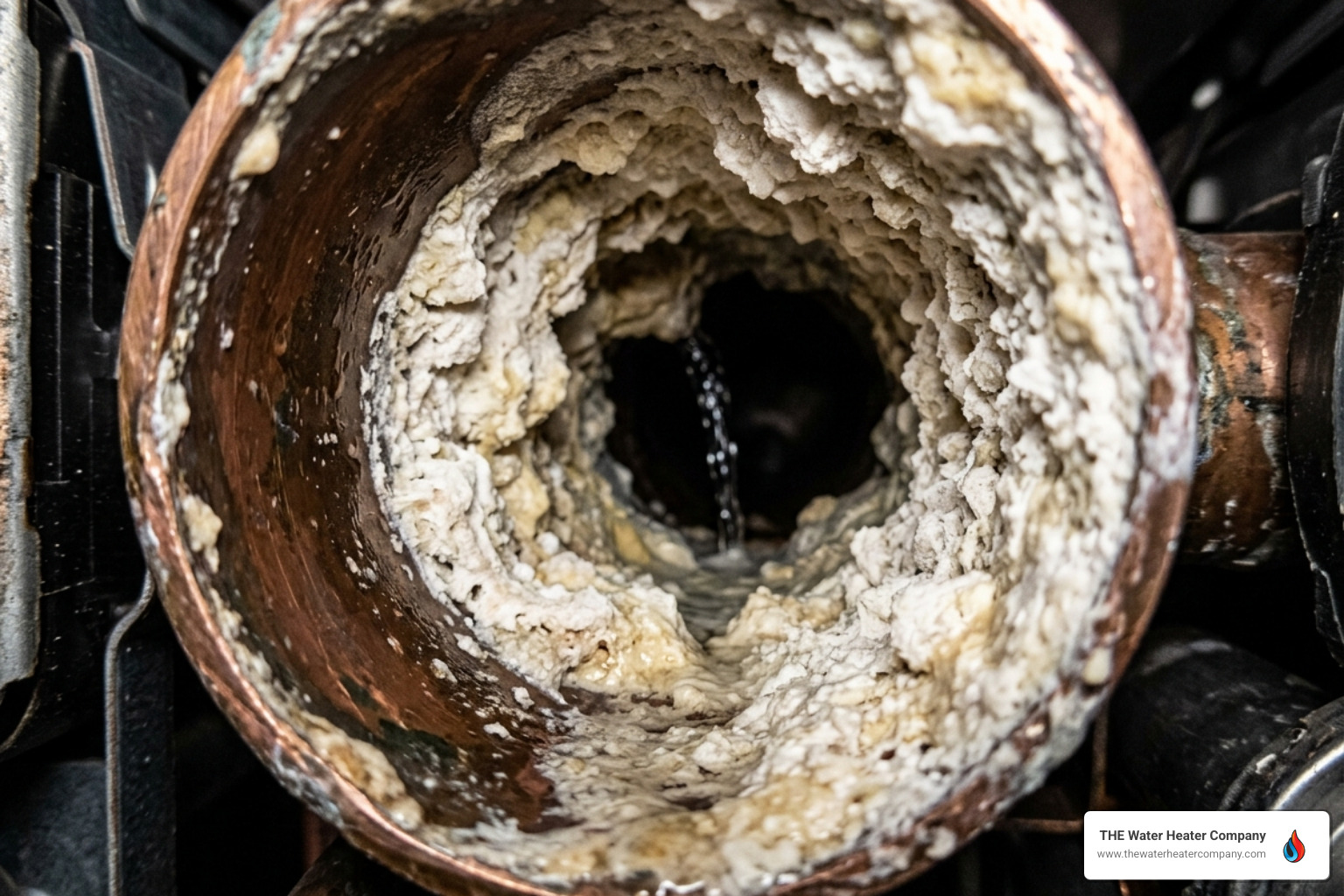
Research shows that scale layers as thin as 1.5 mm can reduce heat transfer efficiency by up to 12%. Because scale acts as an insulator, the burner has to stay on longer and burn hotter to get the water to your desired temperature. This doesn’t just spike your utility bills; it physically stresses the metal components. While a well-maintained unit can easily reach a 20-year lifespan, neglected systems often falter as early as 12 years due to heat exchanger cracks or total blockages.
More info about tankless water heater services
Signs Your Unit Requires Immediate Attention
Your water heater is usually tucked away in a garage or closet, but it will try to “talk” to you when scale starts to take over. If you notice any of the following, it’s time to prioritize tankless water heater descaling and maintenance:
- Reduced Water Flow: If your shower feels more like a drizzle than a downpour, mineral deposits may be physically narrowing the path water takes through the heater.
- Fluctuating Temperatures: Known as the “cold water sandwich,” this happens when scale interferes with the unit’s ability to maintain a steady flame or accurate temperature readings.
- Unusual Noises: Clanging, rumbling, or “kettling” sounds occur when water gets trapped behind scale deposits and turns into steam bubbles that pop violently.
- Error Codes: Most modern units from manufacturers like Navien, Noritz, or Rinnai will display specific codes when they detect a problem. For example, an “LC” code (Lime Condition) is a direct request for descaling.
- Burner Issues: If the unit struggles to ignite or stays on for only a few seconds, the sensors might be coated in white mineral dust, preventing a proper reading.
More info about water heater repair
Step-by-Step Guide to Tankless Water Heater Descaling and Maintenance
Performing a flush is a mechanical process that involves circulating a mild acid through the unit to dissolve the rock-like calcium deposits. If your unit is equipped with “service valves” (usually red and blue handles located directly beneath the unit), you are in luck—this makes the DIY process much simpler.
The Basic Process:
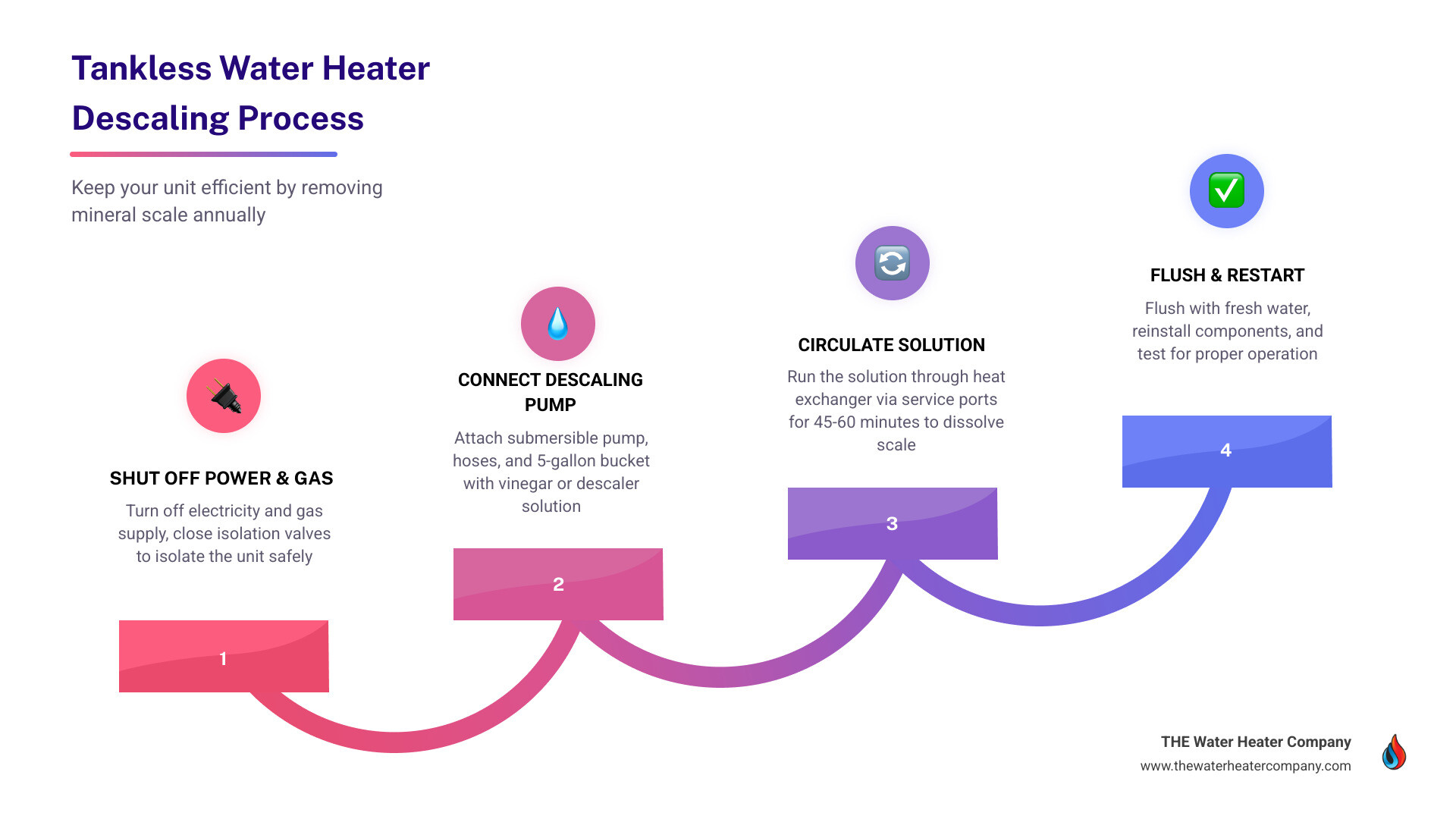
- Isolate the Unit: Turn off the gas and the power. Close the main hot and cold water valves (the ones leading to the rest of the house).
- Connect the Hoses: Attach your circulation hoses to the service ports.
- The Circulation Loop: Place a submersible pump in a 5-gallon bucket filled with your descaling solution. Connect the pump to the cold water service port and run a return hose from the hot water service port back into the bucket.
- Run the Pump: Open the service port valves and turn on the pump. Let it circulate for 45 to 60 minutes. You may notice the solution turning milky or yellowish—that’s the scale dissolving!
- The Flush: After descaling, turn off the pump. Close the service valves and disconnect the hoses. Open the cold water main valve and let fresh water run through the unit and out of the hot service port for at least 5 to 10 minutes to remove any remaining chemicals.
Tools Required for Tankless Water Heater Descaling and Maintenance
To do this right, you’ll need a “Flush Kit,” which we recommend keeping on hand:
- Submersible Pump: A 1/5 or 1/6 horsepower pump is ideal.
- 5-Gallon Bucket: To hold your cleaning solution.
- Circulation Hoses: Standard color-coded washing machine hoses work well.
- Distilled White Vinegar: You’ll need about 4 gallons of food-grade white vinegar.
- Commercial Descaler: For heavy buildup, a citric-acid-based commercial descaler is often more effective than vinegar.
Safety Precautions During Tankless Water Heater Descaling and Maintenance
Safety is paramount. Always ensure the gas supply is completely shut off before you begin. If you have an electric tankless unit, flip the breaker.
- Pressure Relief: Carefully pull the tab on the Temperature and Pressure (TPR) valve to ensure there is no built-up pressure before disconnecting hoses.
- Protective Gear: Wear rubber gloves and eye protection. Even though vinegar is food-grade, it is still an acid that can irritate your eyes and skin, especially when mixed with mineral dust.
- Ventilation: Ensure the area is well-ventilated, particularly if you are using stronger commercial descaling chemicals.
More info about our professional services
How Southern California Water Hardness Impacts Your System
In Southern California, we live in a “very hard water” zone. According to the U.S. Geological Survey (USGS), water hardness at or above 180 mg/L is classified as very hard. In cities like Santa Clarita, Pasadena, and Santa Ana, mineral content often exceeds this threshold.
Hard water accelerates scale formation because there are simply more minerals available to “fall out” of the water during the heating process.
| Region | Typical Hardness Level | Recommended Maintenance |
|---|---|---|
| Santa Barbara | High | Every 6-12 Months |
| Santa Clarita | Very High | Every 6 Months |
| Pasadena | High | Every 12 Months |
| Santa Ana / Irvine | Very High | Every 6 Months |
| Los Angeles / Van Nuys | Moderate to High | Every 12 Months |
If you are in a particularly “crunchy” water area, you cannot afford to skip your annual service. Waiting three or four years between flushes in Santa Clarita could result in a permanent blockage that requires a full heat exchanger replacement.
Beyond Descaling: Routine Maintenance and Prevention
While descaling is the “heavy lifting” of tankless water heater descaling and maintenance, there are several other smaller tasks that keep the unit healthy:
- Inlet Water Filter: Most units have a small screen on the cold water inlet. This catches sand, grit, and pipe scale before it enters the heater. Unscrew it, rinse it under a faucet, and put it back once a month.
- TPR Valve Test: Once a year, lift the lever on your pressure relief valve. Water should discharge freely and then snap shut without leaking. If it drips afterward, the valve needs replacement.
- Visual Inspection: Look for “weeping” at the pipe connections or white, crusty deposits (efflorescence) around the venting. If you see soot or discoloration near the exhaust, call a professional immediately, as this indicates a combustion issue.
- Venting: Ensure the outdoor exhaust vent is clear of bird nests, spider webs, or debris. A blocked vent can cause the unit to shut down or, worse, leak carbon monoxide into your home.
The best way to prevent scale in the first place is to stop the minerals before they reach the heater. Installing a whole-house water softener or a scale-prevention system can significantly reduce the frequency of descaling and protect all your plumbing fixtures.
More info about water filtration and conditioning
Frequently Asked Questions
Can I use white vinegar for descaling?
Yes! Distilled white vinegar is the “gold standard” for DIY maintenance. Its acetic acid content is strong enough to dissolve moderate calcium buildup but gentle enough not to damage the internal copper components. However, for units that haven’t been serviced in several years, a commercial descaler (which often uses citric or phosphoric acid) may be necessary to break through heavy “rock” formations.
How often should I perform this service?
For most Southern California homes, we recommend an annual service. However, if you have a large family using a high volume of hot water, or if you live in a “very hard” water area like Irvine or Camarillo, bi-annual (every 6 months) service is much safer for the unit’s longevity. Always check your manufacturer’s manual, as skipping scheduled maintenance can actually void your warranty.
What happens if I skip maintenance?
If you ignore tankless water heater descaling and maintenance, the scale will eventually bridge the gaps in the heat exchanger, causing the unit to overheat. This triggers error codes and “lockouts” where the unit refuses to provide hot water for safety reasons. Long-term neglect leads to “hot spots” on the heat exchanger, which eventually cause the metal to fatigue and leak, requiring an expensive replacement rather than a simple repair.
Conclusion
Your tankless water heater is a marvel of engineering, providing endless hot water while saving space and energy. But in the mineral-rich environment of Southern California, it needs a little TLC to reach its full 20-year potential. Whether you are in Santa Barbara, the San Fernando Valley, or Orange County, staying on top of your maintenance schedule is the best way to ensure you never have to face a surprise cold shower.
At THE Water Heater Company, we are proud to be your local, family-owned experts. We understand the specific water challenges of our community and are here to help with everything from routine flushes to advanced diagnostics. We offer fast, reliable service across Los Angeles, Ventura, and Orange Counties, backed by industry-leading warranties.
Don’t wait for an error code to pop up on your screen. Keep your system happy, healthy, and efficient for years to come.

The Essential’s
Call THE Water Heater Company today to get immediate help with your water needs.
“
-

“Fair Pricing & Expert Service”
Their technician Gonzo, was clearly very competent and more importantly, he took the time and effort to do a really fantastic job.
-
“Fantastic Service!”
THE Water Heater Company understood the situation I was going through. They were able to help me out and get the job done quickly.
-
“Reasonable Pricing”
Kevin did a great job on replacing my old leaky yet still working water heater. He answered all my questions and explained all the details. -
“Quick Response Time”
He was very informative and responsive to my questions and when I am making a huge investment in my home I want to be sure I am going with a company I could count on and would not cut corners. -
“Real Professionals”
Communication was great with the owner and they were very responsive, ensuring a first-class installation and experience.
-
“Great Service”
Not only did he do the service we needed, but checked the whole unit in addition to other waterline components. -
“Professional and Responsive”
They have repaired my water heater, installed a hot water recirculating pump, and now installed a new water heater. -
“Real Professionals”
It took a little over three hours but no management was necessary as the guys were very competent and clearly have been doing this for a long time.


